Roadside Help Stays On-Site
Choose roadside assistance when a jump start, tire swap, lockout, or small emergency fuel delivery can make the vehicle usable where it is parked.
Phoenix Towing Co. provides roadside assistance when a vehicle can be fixed where it sits and towing when it must be transported. Knowing which service fits can save time and money when a car will not start in a Tempe parking lot or cannot be driven safely on I-17 during a summer heat advisory.
Choose roadside assistance when a jump start, tire swap, lockout, or small emergency fuel delivery can make the vehicle usable where it is parked.
Choose towing when the vehicle needs transport, whether that is three miles to a shop in Glendale or a longer trip on I-10.
The deciding question is whether an on-site fix will make the vehicle safe to drive. Collision damage and shop-only mechanical failures call for a tow.
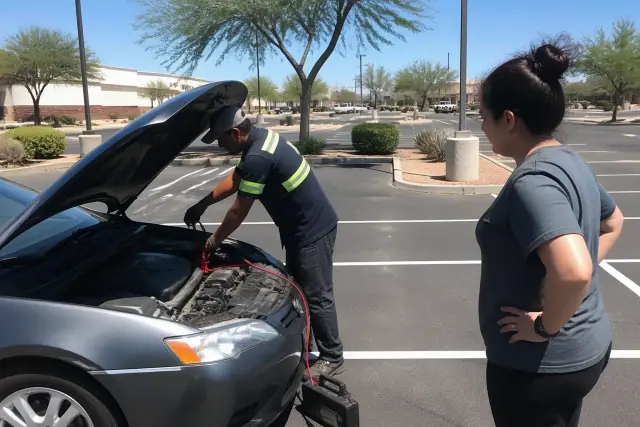
A portable power pack connected to a standard 12-volt automotive battery shows a classic on-site fix. Most jump-start calls take under 15 minutes.
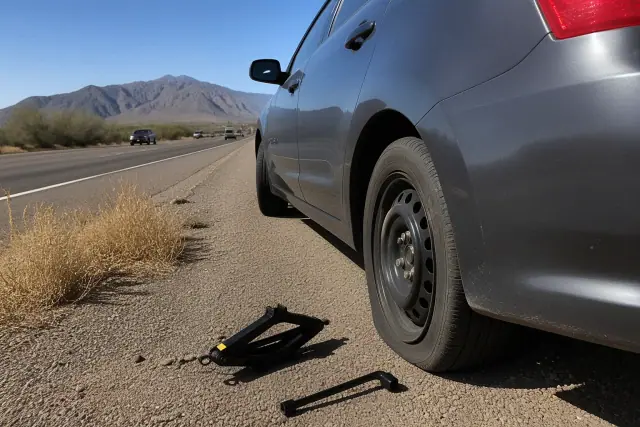
A usable spare or a slow leak that can be inflated points to roadside assistance. No spare or an unrepairable tire may turn the call into a short tow.
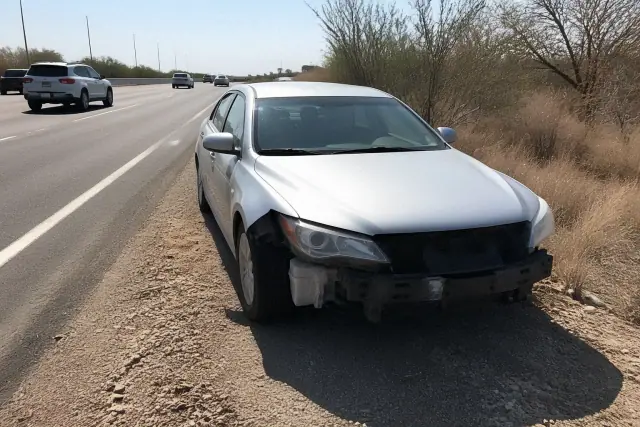
Collision damage or a mechanical failure that cannot be repaired at the scene shows why a tow truck is needed instead of roadside assistance.
Jump boxes, tire irons, air tanks, emergency fuel, and non-destructive lockout tools can resolve many minor problems without a shop visit.
A vehicle that remains unsafe or undriveable after the first check needs transport to a repair shop rather than an attempted roadside fix.
Phoenix summers regularly reach 110°F or higher, and extreme heat can accelerate fluid evaporation inside a battery cell and shorten battery life.
A flat tire call can change once the condition is clear. Without a usable spare or a tire that can be safely inflated, towing is the practical next action.
| Vehicle Situation | Likely Service | Why |
|---|---|---|
| Dead battery, lockout, low fuel, or a flat with a usable spare | Roadside assistance | The problem can usually be addressed where the vehicle sits. |
| Collision damage or a vehicle that cannot be driven safely | Towing | The vehicle needs transport instead of an on-site fix. |
| Shop-only mechanical failure, no spare, or an unrepairable tire | Towing | Roadside help cannot make the vehicle road-ready at the scene. |
Roadside assistance is an on-site attempt to make a parked vehicle usable again; towing is transportation for a vehicle that cannot be fixed there or driven safely. A dead battery, lockout, low tire, or empty fuel tank usually points to roadside help, while collision damage and shop-only repairs point to towing.
The vehicle's condition, the availability of a spare, and whether a repair requires shop equipment can change the service you need. For accident-scene recovery and non-consensual tows in Maricopa County, Arizona Revised Statutes Title 28 also governs towing operations.
Do you need a membership plan? No; you can request roadside assistance or towing directly and pay at the time of service. What should you tell the dispatcher? Describe whether the car cranks, the tire condition, whether a spare is available, and whether the vehicle can be driven safely, so the right truck and equipment can be sent.
Share where the vehicle is, what it is doing, whether it has a usable spare, and whether it appears safe to drive. Those details help determine whether to send roadside equipment or a tow truck across the Salt River Valley.