Proudly serving Phoenix, Glendale, Scottsdale, Tempe, Mesa, Chandler & surrounding areasCall or Text 24/7: 480-245-5233
Aerial drone view of the urban landscape, foothills, and residential sprawl in Phoenix, AZ.

24 Hour Towing and Emergency Wrecker Services in Tempe, AZ

Phoenix Towing Co. provides 24 Hour Towing, Emergency Towing, and Roadside Assistance throughout Tempe, Arizona. Dispatch also handles Flatbed Towing, Local Towing, Long Distance Towing, Accident Recovery, Motorcycle Towing, Jump Start Service, and Car Lockout Service. Trucks move at every hour for calls on city streets, freeways, parking garages, and residential roads. Drivers can request the service and equipment that match the vehicle and situation.

Summer asphalt can exceed 160 degrees in July and August, contributing to dead batteries, tire failures, and overheated engines. Monsoon storms can leave standing water near underpasses and the Rio Salado corridor, while event traffic adds pressure around ASU, Sun Devil Stadium, and Tempe Town Lake. Breakdowns on Loop 101, Loop 202, US 60, or I-10 can place a disabled vehicle near fast-moving traffic. Upfront pricing and an equipment-based recovery plan help drivers understand the tow rate, mileage charge, and safest next step before hookup.

Tempe has 180,587 residents in Maricopa County, with towing demand shaped by student traffic, commuters, events, and late-night activity. Coverage extends from Downtown Tempe and the ASU campus corridor to South Tempe, Curry Road, Diamond Drive, Priest Drive, Rural Road, McClintock Drive, Guadalupe Road, and Baseline Road.

★ ★ ★ ★ ★4.9/5 Average Rating - 20+ Years of Experience - Tempe Towing Company Specialists - Residential & Commercial
Tempe Towing Services

Towing & Roadside Services in Tempe, AZ

The service starts with the problem: a roadside technician for a jump, lockout, tire change, or fuel delivery, and the right tow truck when the vehicle must be moved. Flatbeds protect all-wheel-drive and lowered vehicles, while wheel-lift, wrecker, and winch-out equipment address straightforward tows, collision scenes, and off-road recoveries. For another nearby service area, Phoenix Towing Co. provides towing in Mesa, AZ .

24 Hour Towing

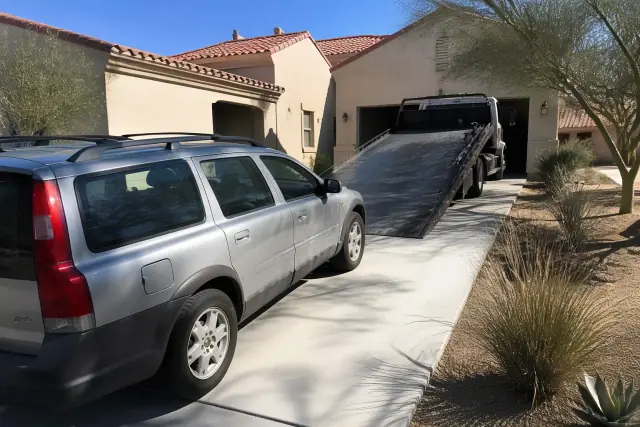
Tow truck parked on a residential driveway in Tempe, AZ, preparing to load a vehicle in a desert landscape.

Dispatch operates every hour of every day, 365 days a year, so late classes, weekend traffic, and overnight breakdowns are covered. Trucks respond across Tempe for roadside problems, local moves, and longer transports without waiting for the next business-day appointment.

Explore Service

Emergency Towing

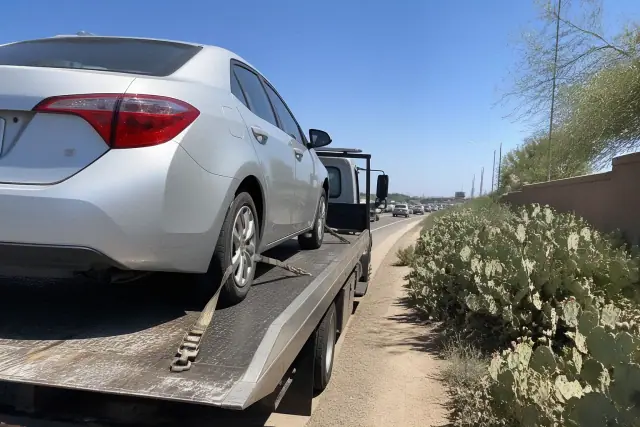
A disabled vehicle secured to a tow truck on a highway shoulder in Tempe, AZ, with cacti and desert sunlight.

When a vehicle stops in a traffic lane on Loop 202 or near an intersection off Southern Avenue, the priority is moving it out of danger safely. Tempe crews are staged for same-day, same-hour response and bring equipment suited to disabled vehicles, freeway shoulders, medians, and other exposed locations.

Explore Service

Roadside Assistance

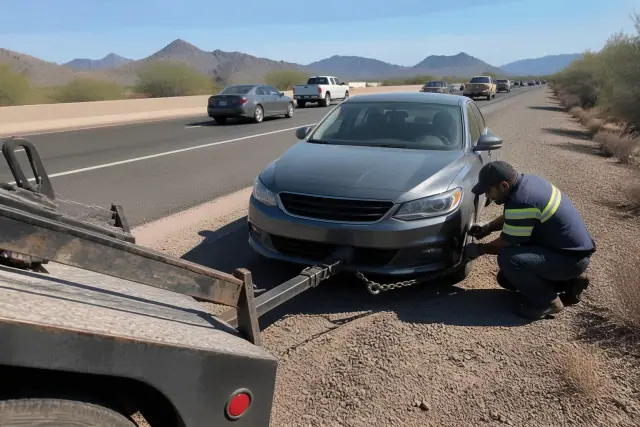
Tow truck connecting to a disabled vehicle on a highway shoulder in Tempe, AZ.

Not every breakdown requires a tow. Roadside technicians handle flat tire changes, jump starts, fuel delivery, lockouts, minor diagnostics, and other get-you-moving fixes; when the issue can be resolved on-site, a $40-$60 roadside fix can avoid an unnecessary tow.

Explore Service

Flatbed Towing

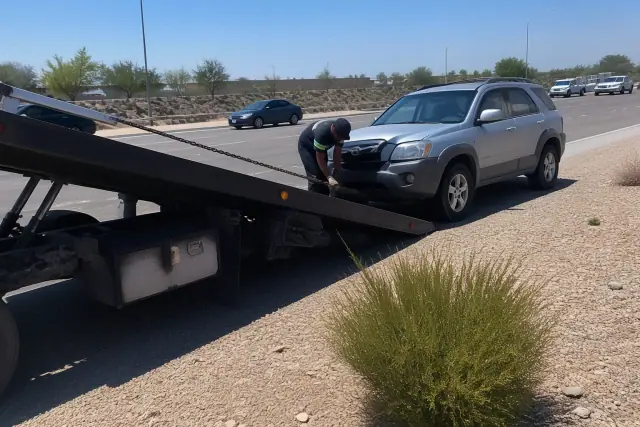
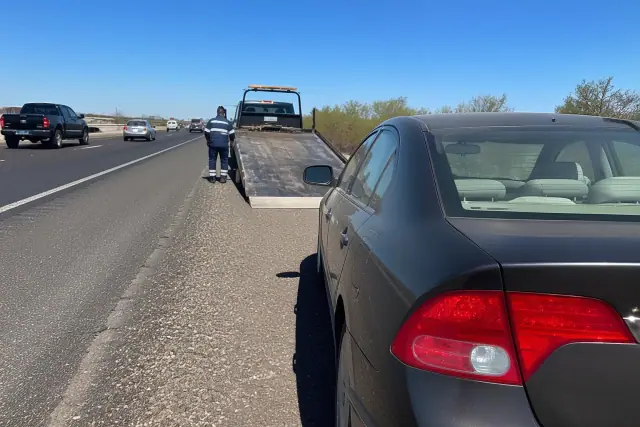
A flatbed tow truck loading a disabled vehicle on a gravel highway shoulder in Tempe, AZ.

A hydraulic flatbed keeps all four wheels off the pavement, reducing strain on drivetrain components and avoiding drag damage to bumpers or ground effects. It is the default choice for late-model vehicles, all-wheel-drive cars, lowered suspensions, aftermarket wheels, dealership transports, and recoveries where the wheels should not roll.

Local Towing

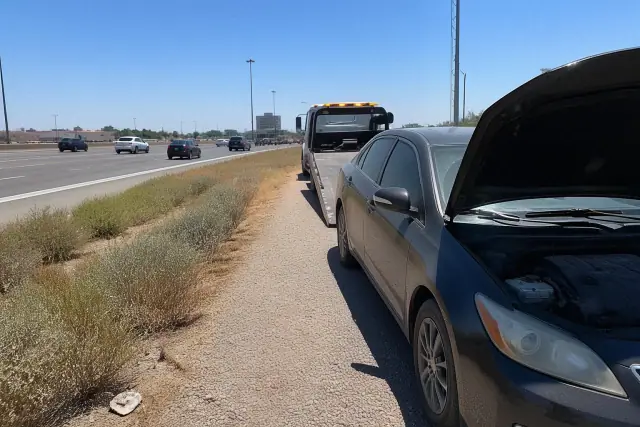
A disabled vehicle parked on the gravel shoulder of a highway in Tempe, AZ during the day.

Local towing covers sedans, coupes, hatchbacks, small SUVs, and other light-duty vehicles under the 10,000-pound GVWR threshold. Straightforward hookups move vehicles from apartment parking lots, Tempe streets, and collision scenes to a requested repair shop, driveway, or storage location.

Long Distance Towing

Disabled vehicle parked on a gravel shoulder near a multi-lane highway in Tempe, AZ.

Long-distance towing supports students moving vehicles to or from out of state, seasonal residents heading north, and drivers who break down mid-trip through the Valley on I-10. These jobs are quoted separately by distance, typically using a per-loaded-mile charge beyond the base hook-up fee.

Accident Recovery

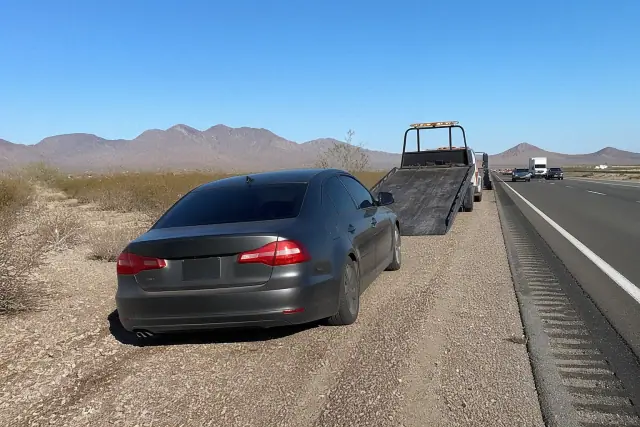
A disabled vehicle being recovered on the shoulder of a highway in Tempe, AZ, with desert scrub and traffic in the

Accident recovery crews coordinate with Tempe Police Department traffic units and Arizona Department of Public Safety troopers when freeway scene-clearance protocols apply. Wreckers and rated winch-out equipment recover vehicles from medians, off-road positions, or their sides, and photos document vehicle condition before it leaves the scene.

Motorcycle Towing

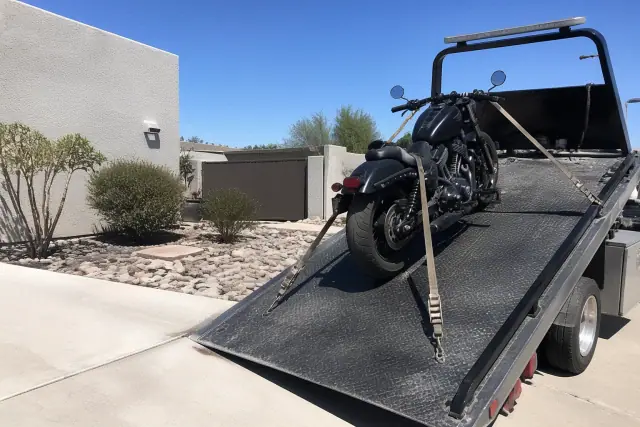
Motorcycle secured with tie-downs on a tow truck bed in a private driveway in Tempe, AZ.

Motorcycles are loaded with motorcycle-specific wheel chocks and soft-tie down points that avoid painted surfaces, fairings, brake lines, forks, and tanks. Crews secure two wheels for breakdown or accident transport near ASU, McClintock Drive, and throughout Tempe without relying on a standard passenger-vehicle hookup.

Jump Start Service

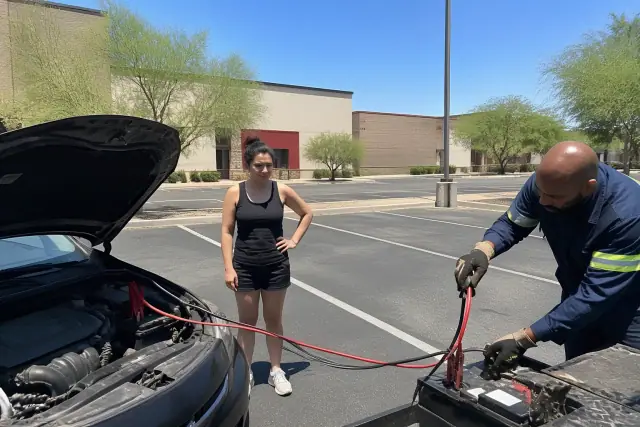
A technician using jumper cables to start a car in a Tempe, AZ parking lot.

Load-tested booster packs provide the jump, while on-site battery and alternator-output checks help distinguish a discharged battery from a failing battery or a deeper electrical issue. Drivers get the test result before deciding whether the vehicle can continue or needs further service.

Car Lockout Service

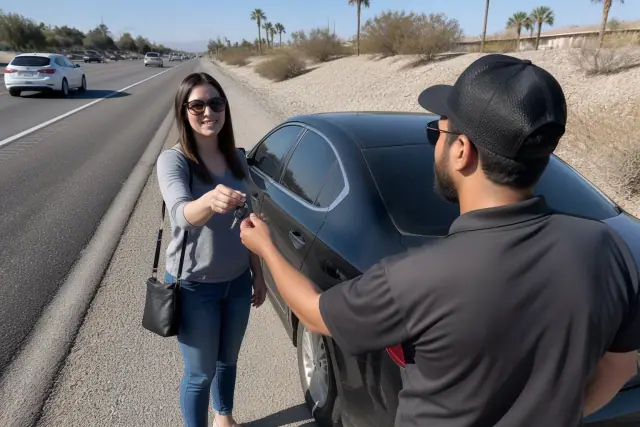
Technician returning keys to a driver at a disabled vehicle on a highway shoulder in Tempe, AZ.

Lockout technicians use non-destructive entry tools designed to protect paint, weatherstripping, and window seals. Most vehicle lockout calls are resolved in under 20 minutes on-site, including calls near Mill Avenue restaurants, Tempe Town Lake, and campus parking areas.

Service & Equipment Selection

How to Choose the Right Towing Service in Tempe

The right response depends on whether the vehicle can be repaired roadside, its weight and drivetrain, its position, and where it needs to go. Sharing those details with dispatch helps match a wheel-lift, flatbed, wrecker, motorcycle setup, or winch-out crew to the call before the truck leaves.

Match the Response to the Problem

A flat tire, lockout, dead battery, or empty tank may be resolved roadside without moving the vehicle. A disabled drivetrain, collision, unsafe traffic position, or repair-shop trip calls for towing and recovery equipment.

Check the Vehicle's Weight Class

Equipment classes are matched to gross vehicle weight rating: light duty is under 10,000 pounds, medium duty runs from 10,001 to 26,000 pounds, and heavy duty is above 26,000 pounds. Confirming the class before dispatch helps prevent an undersized hookup for a large pickup, work van, box van, or small commercial vehicle.

Protect the Vehicle During Loading

All-wheel-drive, lowered, late-model, or modified vehicles benefit from a flatbed that keeps every wheel off the road. Motorcycles need wheel chocks and soft ties placed away from fairings, tanks, forks, and brake lines.

Ask for Upfront Pricing

The quote should identify the base tow rate, mileage charge, and any added service cost before the truck leaves. If the job changes mid-route, dispatch calls before billing so the final invoice does not hide a new charge.

Document Collision Damage

Photos taken before accident towing establish the vehicle's condition at the scene. That record supports an insurance claim and helps separate collision damage from questions that may arise after transport.

Plan the Destination and Distance

Tell dispatch whether the vehicle is going to a specified address, repair shop, dealership, or storage facility. A local move and a cross-town or out-of-state tow use different mileage calculations, equipment planning, and delivery coordination.

Tempe Driving Conditions

Common Tempe Roadside Problems

Tempe towing demand rises with extreme heat, monsoon water, freeway interchange traffic, and dense event crowds. Arizona State University's main campus draws tens of thousands of students, staff, and visitors daily, while additional trucks are staged during the June through September heat and storm stretch.

Request Roadside Help

Heat-Shortened Batteries

Arizona heat can shorten automotive battery life to roughly two to three years, compared with four to five years in milder climates. Jump-start demand is especially heavy from May through September, when on-site testing can show whether the battery, alternator, or another electrical issue is responsible.

Overheating in Stop-and-Go Traffic

Summer heat pushes cooling systems and radiator hoses toward failure, especially during slow traffic on Southern Avenue and Baseline Road. If the vehicle cannot be made safe roadside, towing avoids running an overheated engine farther.

Tire Blowouts on Hot Pavement

Pavement temperatures regularly reach 150 to 160 degrees in summer, accelerating tire sidewall failure and changing traction during recovery. A roadside tire change may solve the problem; damaged wheels, suspension, or an unsafe shoulder position may require a tow.

Keys Locked in the Vehicle

Lockout calls cluster around campus parking, Mill Avenue restaurants, Tempe Town Lake, and other high-turnover destinations. Non-destructive entry tools are selected to open the door without harming paint, weatherstripping, or window seals.

Collision and Off-Road Recovery

Vehicles may come to rest against a curb or guardrail, in a median, off-road, or on their side after a crash. Recovery crews assess the position, use a wrecker or rated winch-out setup, and coordinate scene clearance when traffic units are involved.

Monsoon Flooding and Stalled Engines

Flash flooding along the Salt River bed and standing water near Priest Drive underpasses or the Rio Salado corridor can stall engines and leave vehicles in wash crossings. Recovery straps and rated winching equipment address pulls that a standard wheel-lift cannot safely complete.

Why Phoenix Towing Co.

Why Choose Phoenix Towing Co. in Tempe?

Vehicle failures do not follow a 9-to-5 schedule, one reason the national automobile towing industry is valued at roughly $11 billion. Phoenix Towing Co. combines continuous dispatch, trained equipment selection, local route knowledge, and clear pricing for Tempe roadside, towing, and recovery calls.

24/7 Towing Dispatch

The same dispatch line runs day and night for late classes, weekend activity near Mill Avenue, game traffic, and breakdowns away from home. Calls are handled when they happen instead of being held for a next-available business-hours slot.

Licensed, Insured, and Trained

The operation is licensed and insured, and drivers are trained on Arizona Department of Transportation vehicle-weight and load-securement standards. Work also follows Arizona Revised Statutes Title 28 requirements for vehicle release, non-consensual tow notification, and storage-facility conduct.

Tempe Route & Destination Knowledge

Familiarity with Mill Avenue backups, Apache Boulevard apartments, the Loop 101 and 202 split, and the Rio Salado corridor reduces guesswork when locating a driver. Relationships with Tempe repair shops, dealerships, and storage facilities also support delivery to the requested destination instead of simply the nearest option.

Clear Six-Step Response

How the Tempe Towing Process Works

Each call moves from dispatch details and an upfront quote to an arrival update, on-scene assessment, secure recovery, and delivery. The sequence gives the driver a clear destination, equipment plan, and invoice while allowing the crew to adjust safely if the scene changes.

01.

Call Dispatch

Share the location, vehicle type, and situation, including whether the vehicle is in traffic, off-road, damaged, locked, out of fuel, or unable to start. Dispatch uses those details to identify the likely service and equipment class.

02.

Review the Upfront Quote

Before a truck leaves, review the stated tow rate, mileage charge, and any additional service cost. Long-distance work is quoted separately so the loaded mileage beyond the base hook-up is clear.

03.

Receive an Arrival Window

After dispatch, the driver calls or texts an estimated arrival window. That update helps the motorist stay reachable and identify the vehicle or safe meeting point when the location is crowded or difficult to access.

04.

Assess the Recovery Method

On scene, the driver checks the vehicle, surrounding traffic, wheel and axle condition, ground clearance, and recovery position. That assessment determines whether a wheel-lift, flatbed, wrecker, motorcycle setup, or winch-out is safest.

05.

Document and Secure the Vehicle

Accident damage is photographed before towing, and the crew checks axle weight and tie-down points before transport. The vehicle is then loaded or recovered with equipment matched to its size, drivetrain, and condition.

06.

Deliver and Close Out the Job

The vehicle goes to the specified address, repair shop, dealership, or storage facility, followed by a clear invoice. If the route or job changes before delivery, dispatch calls before adding a charge.

What Each Response Can Accomplish

Towing Outcomes for Tempe Drivers & Businesses

Case Study 1: Roadside Resolution: A jump start, tire change, lockout entry, fuel delivery, or minor diagnostic can get a vehicle moving without paying for an unnecessary tow.

Case Study 2: Protected Vehicle Transport: Flatbed loading, motorcycle wheel chocks, and soft-tie points move sensitive drivetrains, lowered vehicles, aftermarket wheels, and motorcycles without adding avoidable contact damage.

Case Study 3: Collision or Flood Recovery: Wreckers, recovery straps, rated winches, and pre-tow photos support safe removal from medians, washes, underpasses, off-road positions, and traffic scenes.

Towing Help in Tempe

Get Help When Your Vehicle Needs Towing

Call with your location, vehicle type, and situation to receive an upfront quote and the appropriate roadside or towing response. Phoenix Towing Co. dispatches throughout Tempe for breakdowns, lockouts, collisions, local moves, and long-distance transport.

24/7 Towing Help

Tempe Towing FAQs

These answers cover Tempe towing availability, equipment, roadside options, pricing, recovery conditions, and delivery. For a specific vehicle or scene, call dispatch with the location, vehicle type, and problem.

Call Tempe Dispatch

Yes. Dispatch operates around the clock every day of the year for towing, roadside assistance, collision recovery, lockouts, and other supported calls throughout Tempe.

Provide the location, vehicle type, and what happened. Mention whether the vehicle is in traffic, off-road, damaged, locked, out of fuel, all-wheel drive, lowered, or above a standard passenger-vehicle weight so dispatch can plan the appropriate response.

Flatbed transport is the default for late-model vehicles, all-wheel-drive cars, lowered suspensions, aftermarket wheels, dealership moves, and situations where the wheels should not touch the pavement. The hydraulic deck keeps the full vehicle off the road and limits drivetrain strain or drag damage.

Yes. Motorcycle towing uses wheel chocks and soft-tie down points positioned to avoid painted surfaces, fairings, tanks, forks, and brake lines rather than relying on a standard passenger-car setup.

The equipment class follows gross vehicle weight rating. Light duty covers vehicles under 10,000 pounds, medium duty covers 10,001 to 26,000 pounds, and heavy duty covers vehicles above 26,000 pounds, so dispatch should know the vehicle type before sending a truck.

Often, yes. A technician can handle a flat tire change, jump start, fuel delivery, car lockout, minor diagnostic, or another get-you-moving fix on-site; if the issue cannot be resolved safely, the call can shift to towing.

Most vehicle lockout calls are resolved in under 20 minutes once the technician is on-site. Non-destructive entry tools are used to protect paint, weatherstripping, and window seals.

Arizona heat can shorten automotive battery life to roughly two to three years instead of the four to five years common in milder climates. Jump-start crews use load-tested booster packs and check battery and alternator output to help identify the actual electrical problem.

Yes. Fuel delivery is handled as a roadside-assistance response alongside jump starts, lockouts, and tire changes, with the goal of getting the vehicle moving without a separate tow when possible.

The driver assesses the vehicle's position, selects a flatbed, wrecker, or rated winch-out method, and photographs vehicle condition before towing. On freeway incidents, recovery crews follow scene-clearance protocols while working alongside Tempe Police Department traffic units or Arizona Department of Public Safety troopers when those agencies are present.

Dispatch quotes the tow rate, mileage charge, and any additional service cost before the truck leaves. Long-distance towing is quoted separately, typically by loaded mile beyond the base hook-up fee, and dispatch calls before billing if the job changes en route.

The vehicle can go to your specified address, a repair shop, a dealership, or a storage facility when it must wait for repairs. Tempe repair-shop, dealership, and storage relationships help route the vehicle to the requested destination.

Yes. Crews carry recovery straps and rated winching equipment for vehicles in washes, medians, off-road positions, against curbs or guardrails, or resting on their sides; dispatch needs an accurate description so the appropriate equipment is sent.

Coverage includes Downtown Tempe, the ASU campus corridor, South Tempe, Curry Road and Diamond Drive, Rio Salado Parkway near Tempe Town Lake, Priest Drive, Rural Road, McClintock Drive, Guadalupe Road, Apache Boulevard, Southern Avenue, and Baseline Road. Dispatch also handles freeway calls on Loop 101, Loop 202, US 60, and I-10 through the area.

Extreme heat increases battery, tire, hose, and cooling-system failures, while monsoon water can stall engines near washes and underpasses. ASU schedules, Sun Devil Stadium and Mullett Arena events, and weekend Mill Avenue traffic also concentrate breakdown and collision calls in predictable corridors.