Proudly serving Phoenix, Glendale, Scottsdale, Tempe, Mesa, Chandler & surrounding areasCall or Text 24/7: 480-245-5233
Aerial drone view of the urban landscape, foothills, and residential sprawl in Phoenix, AZ.

24 Hour Towing and Emergency Breakdown Services in Peoria, AZ

Phoenix Towing Co. provides 24 hour towing throughout Peoria and the surrounding Valley. Our services include emergency towing, roadside assistance, flatbed towing, local and long distance towing, accident recovery, motorcycle towing, jump starts, and car lockout service. Trucks dispatch around the clock so drivers have help when a vehicle fails on Lake Pleasant Parkway, Loop 303, or another supported Peoria corridor.

Summer pavement temperatures on Peoria roadways routinely climb past 150 degrees, stressing tires, batteries, and radiator hoses. A breakdown on a busy shoulder or live traffic lane can become dangerous quickly. Our Peoria coverage includes trucks positioned for North Peoria, South Peoria, and the neighborhoods between them. Dispatch provides an estimated arrival window and keeps you updated as the truck approaches.

Peoria grew from 154,065 residents in 2010 to 190,985 as of the 2020 census, adding traffic to major arterials and bringing more unfamiliar drivers onto local roads.

★ ★ ★ ★ ★4.9/5 Average Rating - 20+ Years of Experience - Peoria Towing Company Specialists - Residential & Commercial
Towing Services

Complete Towing Services in Peoria, AZ

From disabled cars and motorcycles to accident-damaged vehicles, our service options match the vehicle, road position, destination, and recovery needs. If your trip continues through the West Valley, our Avondale, AZ page explains towing support available in that nearby service area.

24 Hour Towing

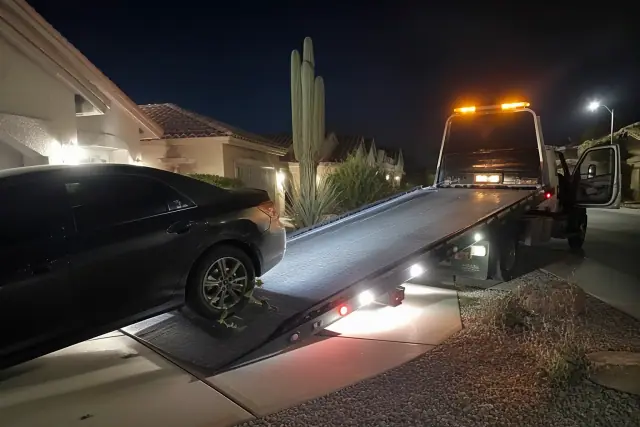
A disabled car being winched onto a tow truck bed at a residence in Peoria, AZ at night.

Round-the-clock dispatch covers night, weekend, and holiday towing throughout Peoria. Whether a vehicle stalls on Thunderbird Road at 2 a.m. or will not start on a Sunday afternoon near Peoria Sports Complex, the dispatch line can get a truck moving.

Explore Service
Emergency Towing

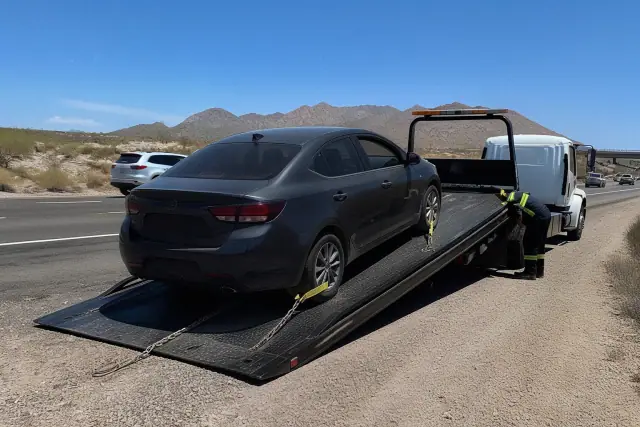
A flatbed tow truck securing a disabled vehicle on a highway shoulder in Peoria, AZ.

Emergency calls include vehicles disabled in traffic, on highway shoulders, or across driveways. Drivers carry road flares, reflective cones, and radio contact with dispatch to help manage the scene until the vehicle is cleared.

Explore Service

Roadside Assistance

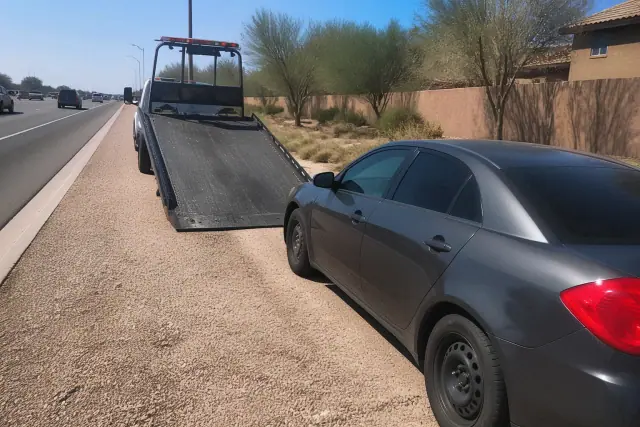
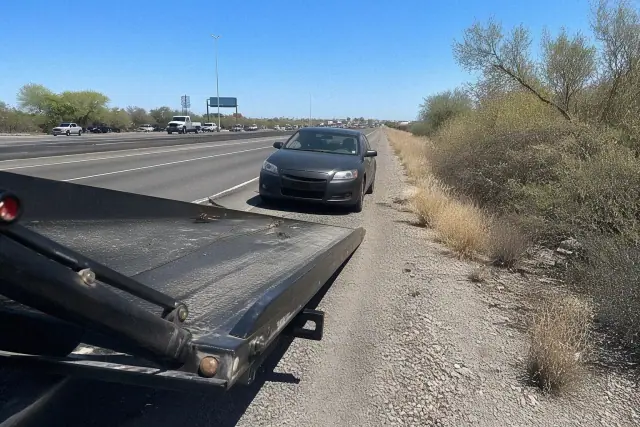
A tow truck with its bed extended to a disabled car on a highway shoulder in Peoria, AZ.

Many roadside problems can be handled without loading the vehicle. Jump starts, car lockouts, spare-tire installation, fuel delivery, and breakdown assessment help determine whether the driver can continue or needs a tow.

Explore Service

Flatbed Towing

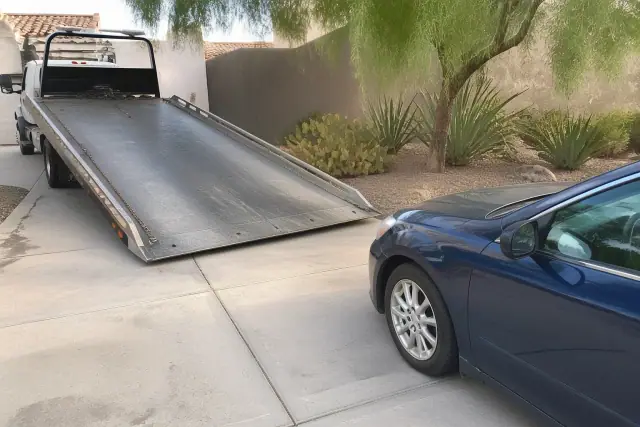
A vehicle on a concrete driveway being winched onto a flatbed tow truck in Peoria, AZ.

Flatbed towing keeps all four wheels off the ground for lowered vehicles, all-wheel-drive cars, and vehicles with drivetrain damage. Hydraulic tilt beds and multi-point tie-downs secure standard passenger vehicles and light-duty trucks for transport.

Local Towing

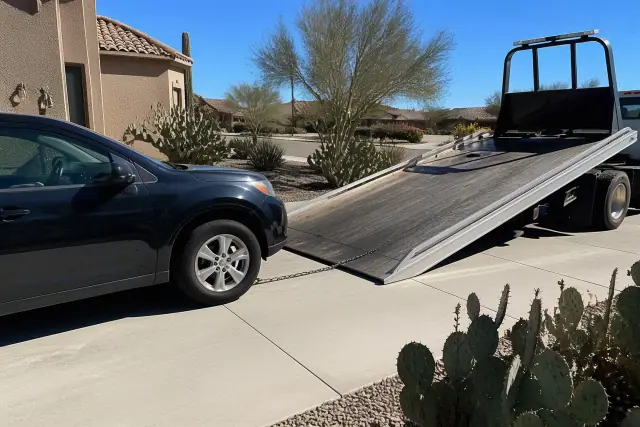
A vehicle on a residential driveway in Peoria, AZ, being secured to a tow truck bed.

For local car towing, dispatch identifies the nearest available truck and confirms whether the vehicle is going to a repair shop, home, or dealership. The driver handles loading and provides a receipt documenting the service.

Long Distance Towing

Long Distance Towing truck with hydraulic bed parked on a roadside shoulder in Peoria, AZ.

Long distance towing can move a vehicle to a dealership elsewhere in the Valley, an out-of-state body shop, or back home after a road-trip breakdown. Rates depend on mileage and vehicle type, and the total is confirmed before the truck leaves.

Accident Recovery

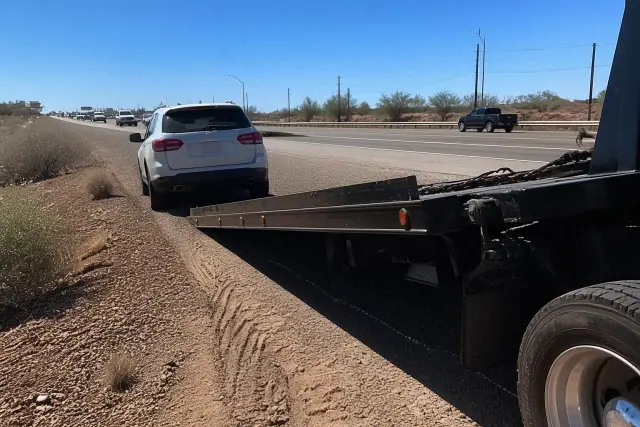
Tow truck with a lowered hydraulic bed on a gravel highway shoulder in Peoria, AZ.

Before moving an accident-damaged vehicle, the driver checks for fluid leaks, undercarriage damage, and airbag deployment. Vehicles in a ditch, median, or off-road position may need winching before flatbed loading, with coordination when law enforcement is on scene.

Motorcycle Towing

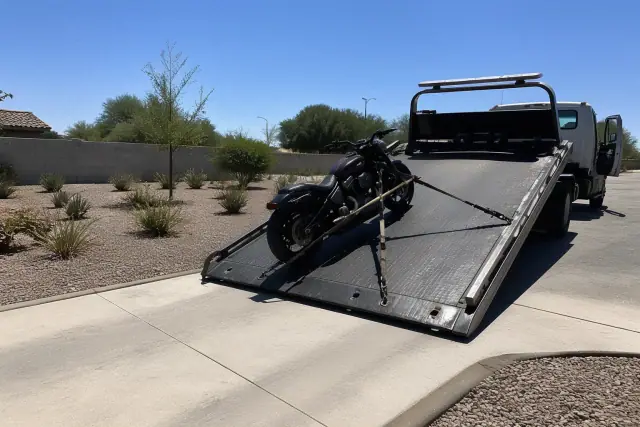
A motorcycle being secured with straps onto a tow truck ramp on a driveway in Peoria, AZ.

Motorcycles are transported with flatbed or wheel-lift equipment fitted with motorcycle-specific tie-down straps and wheel chocks. This setup helps prevent tip-over, frame damage, and unnecessary stress on the forks.

Jump Start Service

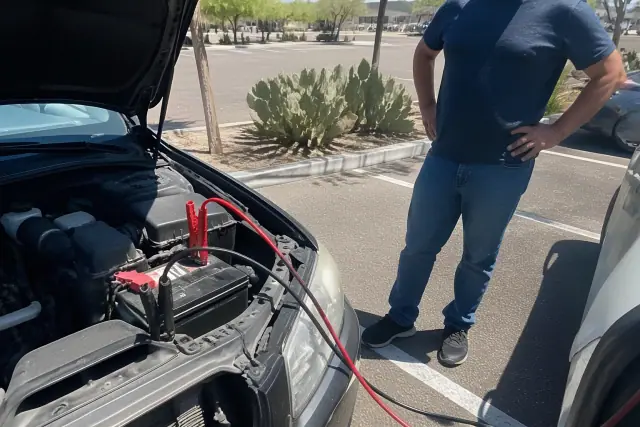
A technician jump-starting a car with jumper cables in a sunny parking lot in Peoria, AZ.

Drivers carry heavy-duty jump boxes suited to vehicle sizes from compact sedans to full-size trucks. A jump start can often be completed in a few minutes on scene and gets the vehicle running for further battery or alternator evaluation.

Car Lockout Service

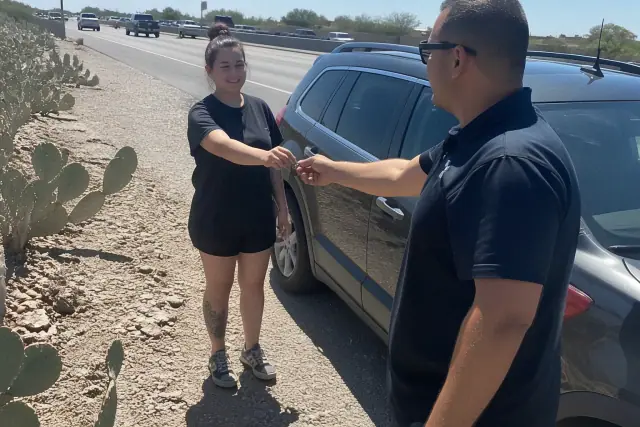
Technician returning car keys to a customer beside their vehicle on a gravel shoulder in Peoria, AZ.

Car lockout service uses non-destructive tools designed for current vehicle models. Careful access methods help protect window seals, trim, and painted surfaces while getting the keys back within reach.

Choosing a Tow

How We Match the Towing Method to Your Vehicle

The right towing method depends on more than whether the engine starts. Dispatch and the arriving driver consider existing damage, drivetrain, clearance, vehicle weight, road position, destination, and whether a roadside service can safely solve the problem.

Vehicle Condition Assessment

Visible collision damage, fluid leaks, airbag deployment, and undercarriage concerns affect whether the vehicle can roll or must be fully supported. The driver checks these conditions before choosing a loading approach.

Drivetrain and Ground Clearance

All-wheel-drive vehicles, lowered cars, and vehicles with drivetrain damage are strong candidates for flatbed transport. Keeping the wheels off the road helps avoid adding damage during the tow.

Distance and Destination

A nearby repair shop, a home driveway, a dealership elsewhere in the Valley, and an out-of-state destination call for different routing and pricing. Confirming the drop-off location early keeps the move clear from dispatch through delivery.

Vehicle Size and Weight

Passenger cars, motorcycles, larger pickups, work trucks, and commercial vehicles need equipment suited to their weight and securing points. Heavier vehicles may require greater winch capacity and reinforced flatbed equipment.

Scene Access and Recovery

A vehicle on a flat curb is different from one in a median, drainage wash, or loose desert shoulder near Lake Pleasant. Access, terrain, and recovery angle determine how the winch and truck should be positioned.

Roadside Help or a Tow

A dead battery, lockout, flat tire, or empty tank may be resolved where the vehicle sits. Stalled engines, overheating radiators, serpentine belt failures, and unsafe vehicle conditions may make transport to a repair shop the safer choice.

Peoria Roadside Risks

Common Breakdowns Facing Peoria Drivers

Summer heat can push asphalt surface temperatures well above 140 degrees, accelerating battery, tire, belt, hose, and coolant-system trouble. Monsoon rain, high-traffic corridors, and remote desert stretches add separate risks when a vehicle stops moving.

Request Roadside Help

Heat-Weakened Batteries

Arizona's dry heat can shorten typical car battery life to roughly two to three years rather than the four to five years common in milder climates. Jump-start calls rise sharply from May through September, especially when an older battery is already struggling.

Tire Blowouts and Sidewall Damage

Extreme pavement heat puts added stress on worn tires and can contribute to blowouts or sidewall separation. A disabled vehicle on Thunderbird Road, Loop 303, or another busy corridor needs to be moved from traffic safely.

Coolant-System Overheating

Radiator hoses, worn belts, and cooling-system failures can leave an engine stalled or overheating in Peoria heat. Roadside assessment determines whether the issue can be addressed safely or the vehicle should go to a repair shop.

Vehicles Stalled in Traffic

A disabled vehicle in a live lane or on a narrow highway shoulder creates a fast-moving hazard, especially after dark or during peak traffic. Reflective cones, road flares, and scene awareness help protect the recovery area while the vehicle is cleared.

Collisions and Off-Road Recovery

Collisions on Loop 101 or hydroplaning during a monsoon can leave a vehicle damaged, in a median, or off the road. Recovery may require careful inspection and winching to stable ground before the vehicle can be loaded.

Keys, Flat Tires, and Empty Tanks

Locked-in keys, a flat tire, or an empty fuel tank can interrupt a trip without requiring full towing. Non-destructive lockout tools, spare-tire equipment, and fuel delivery address these common roadside situations on site.

Why Choose Us

Why Peoria Drivers Choose Phoenix Towing Co.

Safe towing depends on the operator, equipment, and dispatch knowledge behind the truck. Phoenix Towing Co. combines licensed and insured operation with Peoria route familiarity, appropriate recovery equipment, and trained drivers.

Licensed and Insured Operators

Phoenix Towing Co. operates as a licensed towing company with commercial insurance coverage on every vehicle and driver. That protection matters during loading, transport, and delivery.

Peoria-Area Dispatch Knowledge

Truck placement and local routing account for traffic on Thunderbird Road and Loop 303, remote terrain near Lake Pleasant, and thinner cell coverage toward the Yavapai County line. Dispatch uses that context when selecting the nearest available truck.

Equipped and Trained Crews

Drivers train on vehicle securing, winch operation, and scene safety. Trucks carry wrecker equipment, safety gear, and tie-down systems suited to passenger cars, motorcycles, and light-duty trucks.

Simple Towing Process

Our Towing Process in Peoria, AZ

The process is designed to remove uncertainty from the first call through vehicle delivery. Dispatch gathers the essential details, selects a truck, and keeps the driver informed while the operator confirms the towing method, destination, and price.

01.

Tell Dispatch What Happened

Share your location, vehicle type, and what happened. Nearby exits, mile markers, road direction, or a recognizable landmark can help dispatch identify the scene.

02.

Receive an Arrival Window

Dispatch identifies the nearest available truck and gives you an estimated arrival window. Location, current call volume, traffic, and distance from remote areas can affect that estimate.

03.

Get En Route Updates

The driver calls or texts while heading to your location. If traffic or road conditions change the estimate, dispatch keeps you updated.

04.

Assess the Vehicle and Method

On arrival, the driver checks the vehicle and scene before confirming flatbed, wheel-lift, or winch recovery. Existing damage, drivetrain, clearance, terrain, and road position guide the decision.

05.

Confirm Destination and Price

Choose the repair shop, home, dealership, or storage yard where the vehicle should go. Pricing is provided before loading so the route and cost are clear.

06.

Secure, Transport, and Document

The vehicle is secured with the appropriate equipment, transported to the confirmed destination, and delivered. A receipt documents the service performed.

Case Studies

Towing Solutions for Peoria Vehicles & Roadside Situations

Case Study 1: Disabled passenger vehicle: Dispatch confirms the location and destination, then the driver selects flatbed or wheel-lift towing based on drivetrain, ground clearance, and existing damage.

Case Study 2: Motorcycle transport: Motorcycle-specific tie-down straps and wheel chocks stabilize the bike on suitable flatbed or wheel-lift equipment without relying on standard car chains.

Case Study 3: Accident recovery: The operator inspects leaks, undercarriage condition, and airbag deployment, then winches the vehicle to stable ground when needed before transport.

Need Towing Help?

Request 24 Hour
Towing in
Peoria, AZ

Call Phoenix Towing Co. and share your location, vehicle type, and situation. Dispatch will identify an available truck, provide an arrival window, and confirm the method, destination, and pricing before loading.

Towing Help

FAQs About 24 Hour Towing in Peoria, AZ

Get practical answers about towing cost, arrival timing, vehicle handling, roadside safety, service coverage, and what to expect from dispatch.

Call Dispatch

Local towing typically combines a base hookup fee with a per-mile rate outside a standard service radius. Industry-wide averages for a shorter basic tow are about $75 to $125, while longer trips commonly range from $2.50 to $7 per mile depending on vehicle size and distance. Phoenix Towing Co. confirms the total before the truck leaves, and heavier vehicles, after-hours calls, or off-road winch recovery can affect the price.

Arrival time depends on your location, current call volume, traffic, and available trucks. Dispatch positions trucks for high-traffic areas such as Thunderbird Road, Loop 303, and the neighborhoods around Peoria Sports Complex, while remote calls near Lake Pleasant or the Yavapai County line may require more travel time. You receive an estimated arrival window and updates if road conditions change it.

Flatbed towing places the entire vehicle on a hydraulic bed so all four wheels stay off the ground. Wheel-lift towing raises either the front or rear wheels while the opposite end rolls on its tires. The driver selects the method based on drivetrain, ground clearance, and existing damage.

Yes. Phoenix Towing Co. runs 24 hour towing every day of the year, including nights, weekends, and holidays. A call at 3 a.m. on a holiday weekend is handled through the same staffed dispatch line, equipment, and licensed drivers used during the day.

Move as far onto the shoulder as safely possible, turn on your hazard lights, and remain inside with your seatbelt on if you are exposed to live traffic. Call for towing and provide the road, travel direction, nearby exit, or visible mile marker. If the scene feels dangerous, contact local law enforcement while you wait.

Motorcycle towing uses flatbed or wheel-lift equipment fitted with motorcycle-specific tie-down straps and wheel chocks. This setup keeps the bike stable and reduces the risk of tip-over, frame damage, or stress on the forks. Standard car tow chains are not used as a substitute for motorcycle securing equipment.

The driver checks for fluid leaks, structural and undercarriage damage, and airbag deployment before moving the vehicle. If it is in a ditch, median, or off-road position, winch recovery brings it to stable ground before flatbed loading. The operator coordinates with responding officers when law enforcement is on scene and documents the vehicle's condition before transport.

A jump start can get the vehicle running so you can reach a shop and determine whether the battery or another component, such as the alternator, caused the problem. If the battery repeatedly needs a jump, that pattern may indicate replacement is the better next step. The roadside visit restores power but does not replace a full battery diagnosis.

Often, yes. Jump starts, car lockouts, spare-tire installation, and fuel delivery can frequently be completed on site. For an overheating radiator, stalled engine, serpentine belt failure, or another unsafe condition, the driver may recommend towing the vehicle to a repair shop.

Yes. Long distance towing can move a vehicle to a dealership elsewhere in the Valley, an out-of-state body shop, or back home after a road-trip breakdown. Pricing is based on mileage and vehicle type, and the total is confirmed before the truck leaves.

Technicians use non-destructive lockout tools designed for current vehicle models. The approach is intended to reach the lock without scratching paint, denting panels, or damaging window seals and trim.

Yes. Roadside equipment supports spare-tire installation, and fuel delivery can help when a driver runs out. These services are especially useful on longer stretches such as Lake Pleasant Parkway, where fuel stations may be farther apart.

The fleet includes equipment for larger pickups, work trucks, and commercial vehicles that require higher gross-vehicle-weight capacity. Appropriate winch capacity and reinforced flatbeds help move these vehicles without adding stress to the frame or suspension. Dispatch needs the vehicle type to select suitable equipment.

Provide your location, vehicle type, what happened, and the destination if you already know it. On a highway, include the direction of travel, a nearby exit, or a visible mile marker. Those details help dispatch choose the nearest suitable truck and provide an arrival window.

Coverage includes Downtown and Old Town Peoria, West and East Peoria, North Peoria near Lake Pleasant, South Peoria, Peoria Hills, Sun City, Sun City West, and Litchfield Park. Trucks also serve corridors along Loop 303, Thunderbird Road, and Happy Valley Road. Because Peoria is the state's sixth-largest city by land size, truck positioning helps account for significant travel between neighborhoods.